On January 15, TSMC held its earnings conference call, reporting a record‑high Q4 2025 performance driven by strong AI demand and signaling an ambitious expansion plan for 2026, underlining its long‑term confidence in the AI sector.
Financials Outperform, Profitability Remains Robust
In Q4 2025, TSMC’s consolidated revenue reached approximately NT$1.46 trillion, up 20.5% year‑over‑year and 1.9% quarter‑over‑quarter. Net after‑tax profit was around NT$505.74 billion, with EPS at NT$19.50, both representing 35.0% year‑over‑year and 11.8% quarter‑over‑quarter growth. In U.S. dollar terms, revenue hit $33.73 billion, a 25.5% year‑over‑year increase. Key profitability metrics were solid: gross margin at 62.3%, operating profit margin at 54.0%, and net profit margin at 48.3%, demonstrating resilient earnings power.
Advanced Nodes Drive Growth, Application Mix Optimizes
By process node, 3nm, 5nm, and 7nm technologies contributed 28%, 35%, and 14% of revenue, respectively. Together, 7nm and below accounted for 77% of total revenue, reinforcing TSMC’s technology leadership. By application, High‑Performance Computing (HPC) represented 55% of revenue, driven by robust AI demand, followed by smartphones at 32%, IoT at 5%, and automotive at 5%. Sequentially, HPC, smartphone, and IoT revenues grew 4%, 11%, and 3%, respectively, while automotive slipped 1% and datacom equipment declined 22%. Geographically, North American customers contributed 74% of revenue, with mainland China and Asia‑Pacific each at 9%, and Japan and EMEA each at 4%.
2026 Outlook Confirms Strong Growth; Q1 Guidance Sets New Record
TSMC forecasts Q1 2026 revenue of $34.8–$35.8 billion, representing about 4% sequential growth and a 38% year‑over‑year surge, potentially setting another quarterly record. Gross margin is projected at 63%–65% and operating margin at 54%–56%, reflecting continued profit‑margin expansion. CFO Wendell Huang noted that overall capacity utilization is expected to rise moderately in 2026, with 3nm margins likely to exceed the corporate average, becoming a key earnings driver.
Global Capacity Expansion Accelerates
TSMC’s 2026 capital expenditure is projected at $52–$56 billion, a historic high, to support capacity expansion and technology upgrades. In Arizona, USA, the first fab is in high‑volume production, the second fab is scheduled for production in the second half of 2027, the third fab has broken ground, and the fourth fab plus an advanced packaging facility are awaiting permits. In Japan, the first specialty fab in Kumamoto is achieving excellent yields, while the second fab is under construction. The Dresden, Germany fab is progressing on schedule, and in Taiwan, additional 2nm fabs are being planned alongside continuous upgrades to advanced packaging facilities.
Addressing Challenges with Confidence
Regarding concerns about Taiwan’s power supply, CEO CC Wei acknowledged the need for close attention, emphasizing that adequate electricity is critical to capacity ramp‑up. Taiwan’s Ministry of Economic Affairs has assured stable power supply through 2032, factoring in AI and semiconductor expansion needs. On competition from Intel, Wei stated bluntly, “We are not afraid,” noting that advanced technology requires 2–3 years of R&D plus 1–2 years of production validation—and TSMC’s 30+ years of industry experience positions it well against competitive pressures. As for memory chip shortages and price increases, Wei indicated no impact on TSMC, as its customers focus on high‑end segments with lower sensitivity to cost fluctuations and healthy demand forecasts.
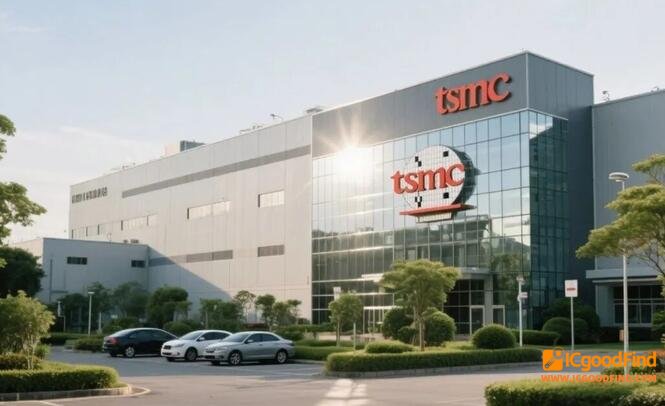
CC Wei’s Key Message: AI Demand Is “Absolutely Not a Bubble.” He stressed that AI applications are gradually penetrating daily life, and both customer financial health and demand evidence confirm that AI demand is real, healthy, and yields strong returns. This conviction supports TSMC’s massive capital expenditure plans, reflecting the company’s firm long‑term confidence in the AI sector. Going forward, revenue will be driven by four platforms: smartphones, HPC, IoT, and automotive electronics, with customer engagement cycles now extending 2–3 years ahead, deeply anchoring TSMC to core industry needs.
ICgoodFind : Leveraging advanced nodes and AI momentum, TSMC has delivered soaring results. Its global capacity expansion and capital investments lay the foundation for long‑term growth, reinforcing its leading position in the industry.
